
Hello, I'm Geri!
I’m Geri Coady—a designer and illustrator from St. John’s, Newfoundland—now living in Nottingham, UK. Join me as I share my lifelong passion for Japanese culture, language, and travel through illustration.
Newest Arrivals
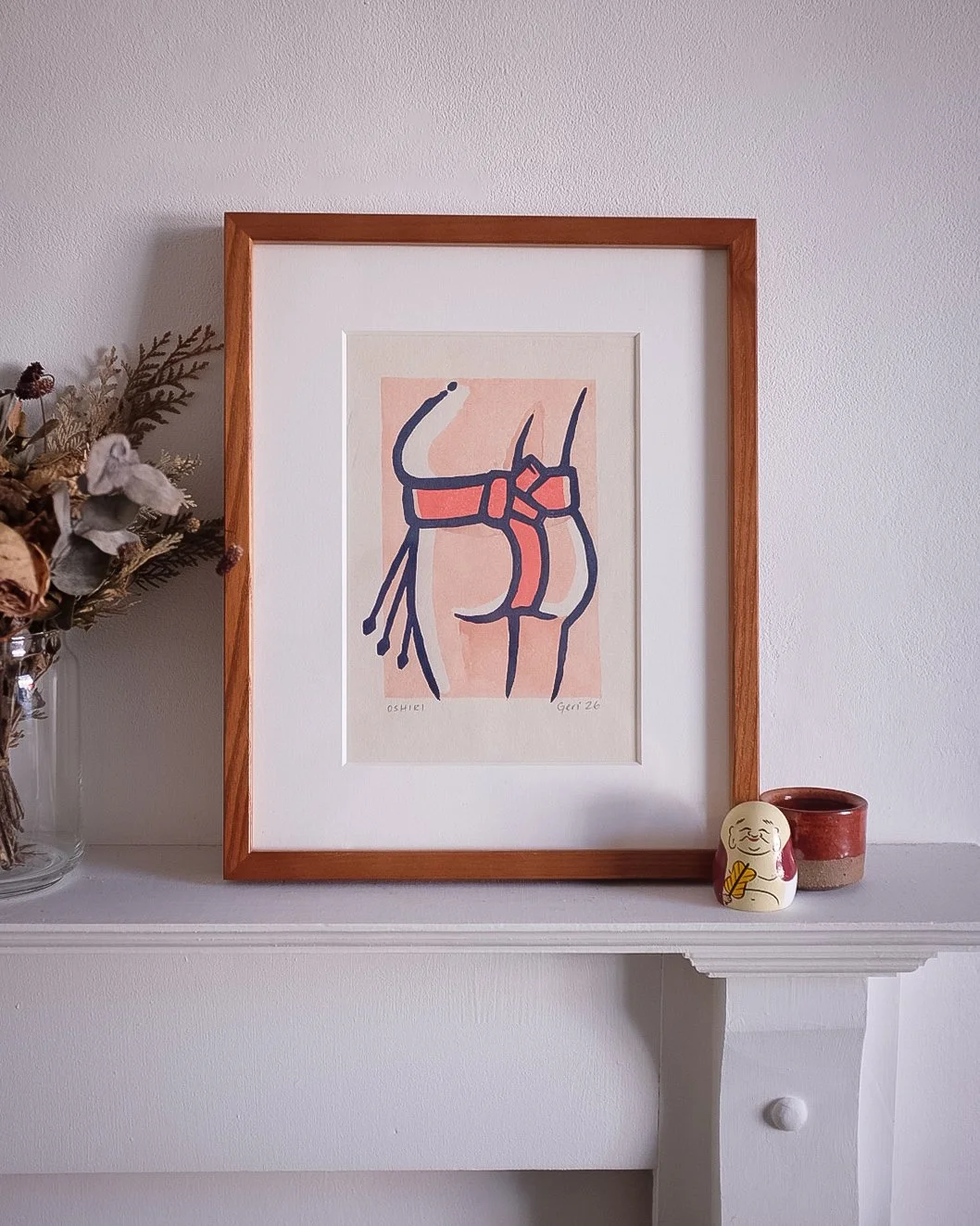
A cheeky little 3-colour sumo woodblock print inspired by the iconic sumo wrestler's robust posterior. 🍑
I created this piece from concept, to carving, and hand-printing at the Mokuhanga School in Karuizawa, Japan.
Each print in this small limited run was printed individually by hand, meaning slight variations and imperfections are part of the character of the piece.
Signed edition of 4. (Prints are not numbered.)
What is a mokuhanga print?
Mokuhanga is a traditional Japanese woodblock printing technique using hand-carved wooden blocks, water-based pigments, brushes, and washi paper.
These prints were created using the sosaku-hanga (“creative print”) philosophy, where the artist is responsible for every stage of the process — from the original sketch, to carving the blocks, to hand-printing each individual piece.
Product details
Designed, carved and printed by me during my residency at the Mokuhanga School in Karuizawa, Japan. Each print is 180 × 250 mm square and printed on off-white washi paper. Please note that due to the nature of the hand-made prints, each print may differ slightly.
Prints are packaged in cello bags with rigid cardboard inserts and shipped in flat mailers.
Please note that frames and mounts are not included.
Delivery times & prices
We ship worldwide. 日本へ国際郵便で送ります。
UK deliveries: 3-4 working days via Royal Mail 1st class
International deliveries available via Royal Mail International Standard Airmail
Prices calculated during checkout For more information on shipping times for international deliveries, please check the delivery & returns page.
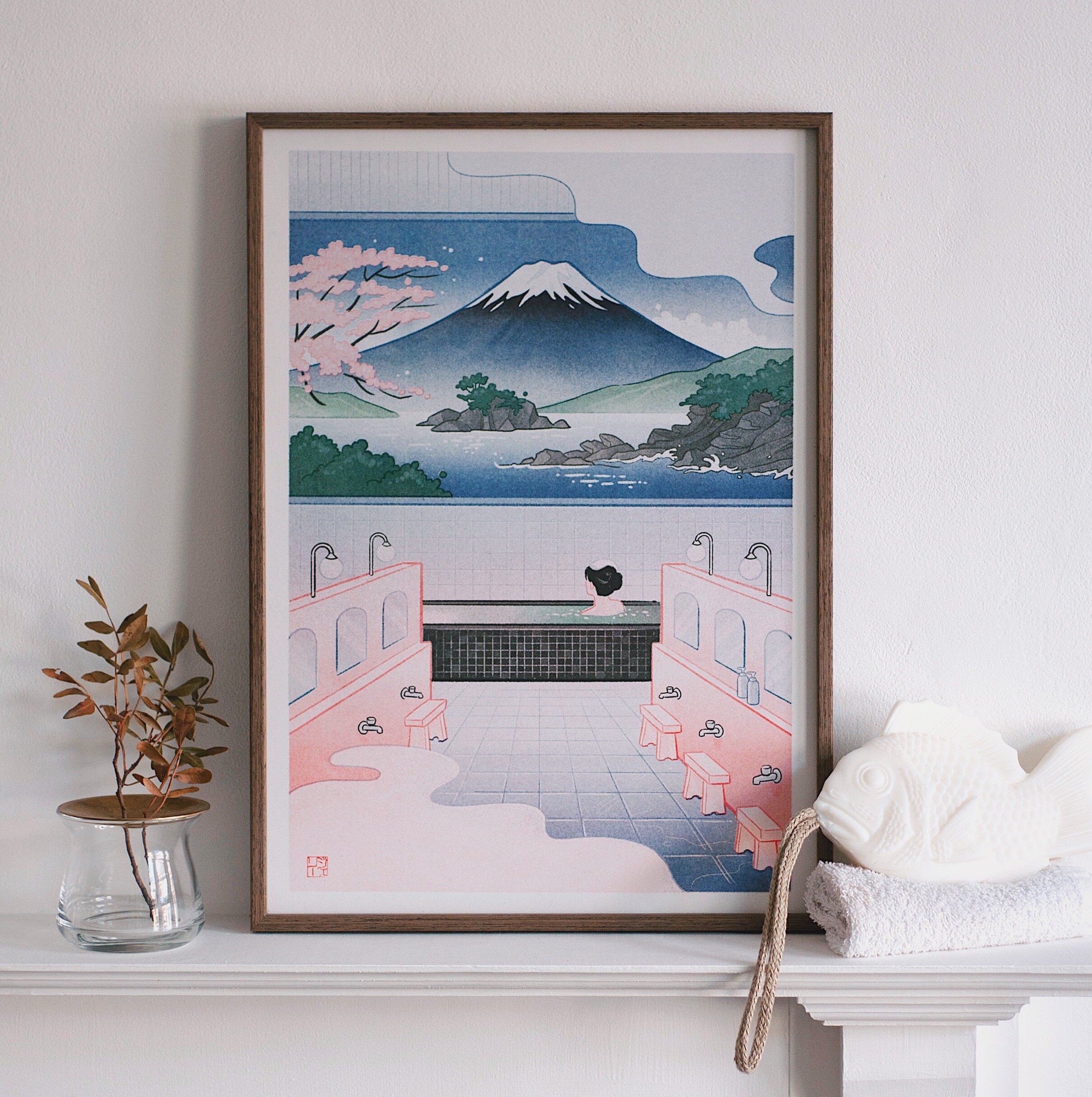
A sentō (銭湯) is a type of communal bathhouse found in Japan. These establishments were once the norm for people to visit for daily bathing routines, but since the second half of the 20th century when bathtubs became a more standard feature in Japanese homes, their numbers have decreased significantly. According to a survey in 2018, there are now fewer than 4000 bathhouses remaining countrywide. Still, dedicated bathhouse regulars insist that sentō are not just about bathing—they carry social and cultural importance, too. The time spent bathing and relaxing with fellow community members in such an intimate environment has a clear influence on maintaining strong relationships.
A common feature found throughout many bathhouses in the Kanto region of Japan are the large, painted murals of Mount Fuji looming over the premises. The very first mural was painted in 1912 in the Kikai-yu bathhouse in Chiyoda, Tokyo. The painter, originally from Shizuoka, wanted to make customers happy by painting a symbol of his hometown for all to enjoy. The mural drew attention and its popularity inspired other bathhouses to follow suit. Today, there are only three remaining mural painters left in Japan, including 38 year old Tanaka Mizuki—Japan's first and only woman mural painter.
This four-colour riso print has been inspired by traditional shin-hanga woodblock printing, and would be the perfect addition to a relaxing bathroom decor.
What is a riso print?
These prints use risograph technology, a method of printing developed in Japan in the mid-1980s. It can be described as a mix between screenprinting and photocopying. The risograph process produces prints with extremely vibrant, crisp inks. Sometimes these inks overlap during the printing process to create interesting and unique details—these slight variations and colour shifts are part of the charm of riso, adding character and a handmade-feel to the art. These soy-based inks also have a lower environmental impact.
Please note: riso’s soy inks are similar to newspaper printing in that they never get fully absorbed into the paper, so take care not to handle the print or touch the ink directly to avoid any risk of smudging.
Product details
Printed in Glasgow, UK by the acclaimed Risotto print studio. Each print is A3 size (297 x 420 mm / 11.7 x 16.5 in) and is printed on 250gsm heavyweight 100% recycled and FSC® Recycled certified Context paper.
Each print is signed with a traditional Japanese red ‘hanko’ artist stamp. Prints are packaged in cello bags with rigid cardboard inserts and shipped in flat mailers.
Please note that frames are not included.
Delivery times & prices
We ship worldwide. 日本へ国際郵便で送ります。
UK deliveries: 3-4 working days via Royal Mail 1st class
International deliveries available via Royal Mail International Standard Airmail
Prices calculated during checkout For more information on shipping times for international deliveries, please check the delivery & returns page.
NOTE TO AMERICAN CUSTOMERS:
As of July 1 2020, international parcel shipping rates to America have increased by over 100%. This has come to a huge shock to many of us small business owners. The United States Postal Service (USPS) has been forced to increase their rates by the US government, and as a result, these increases have been passed on to Royal Mail customers here in the United Kingdom.
This price increase only affects parcel-sized packages, and this A3-size print can only be shipped to the United States in this method. The rates for letter mail and large letter have not changed, so if you cannot justify the shipping cost and would still like to order something from my store, I would recommend looking at my pins, patches, and smaller A4 sized-prints. If you don’t mind the shipping cost, please go ahead and order! I apologise for the inconvenience, and hope that you understand the changes are beyond my control.

Jigokudani (地獄谷), or Hell Valley, is located in Yamanouchi, Nagano prefecture, and is world-renowned for its large population of Japanese snow monkeys. Each morning, these mischievous macaques travel down from the mountains to bathe in the steamy natural hot springs before heading back into the safety of the forests at night. Geri's travel tip: If you want a really special experience, book yourself a stay at the family-run "Korakukan" ryokan, featured in the background of this print. The monkeys take over the inn's outdoor onsen, too, and where else can you brush your teeth while watching monkeys groom each other on the rooftops?
This four-colour riso print has been inspired by traditional shin-hanga woodblock printing, and would be a perfect memory of a hike to Jigokudani to see these gorgeous and cheeky creatures.
What is a riso print?
These prints use risograph technology, a method of printing developed in Japan in the mid-1980s. It can be described as a mix between screenprinting and photocopying. The risograph process produces prints with extremely vibrant, crisp inks. Sometimes these inks overlap during the printing process to create interesting and unique details—these slight variations and colour shifts are part of the charm of riso, adding character and a handmade-feel to the art. These soy-based inks also have a lower environmental impact.
Please note: riso’s soy inks are similar to newspaper printing in that they never get fully absorbed into the paper, so take care not to handle the print or touch the ink directly to avoid any risk of smudging.
Product details
Printed in Glasgow, UK by the acclaimed Risotto print studio. Each print is A3 size (297 x 420 mm / 11.7 x 16.5 in) and is printed on 100% recycled and FSC® Recycled certified Cyclus paper.
Each print is signed with a traditional Japanese red ‘hanko’ artist stamp. Prints are packaged in cello bags with rigid cardboard inserts and shipped in flat mailers.
Please note that frames are not included.
Delivery times & prices
We ship worldwide. 日本へ国際郵便で送ります。
UK deliveries: 3-4 working days via Royal Mail 1st class
International deliveries available via Royal Mail International Standard Airmail
Prices calculated during checkout For more information on shipping times for international deliveries, please check the delivery & returns page.
NOTE TO AMERICAN CUSTOMERS:
As of July 1 2020, international parcel shipping rates to America have increased by over 100%. This has come to a huge shock to many of us small business owners. The United States Postal Service (USPS) has been forced to increase their rates by the US government, and as a result, these increases have been passed on to Royal Mail customers here in the United Kingdom.
This price increase only affects parcel-sized packages, and this A3-size print can only be shipped to the United States in this method. The rates for letter mail and large letter have not changed, so if you cannot justify the shipping cost and would still like to order something from my store, I would recommend looking at my pins, patches, and smaller A4 sized-prints. If you don’t mind the shipping cost, please go ahead and order! I apologise for the inconvenience, and hope that you understand the changes are beyond my control.
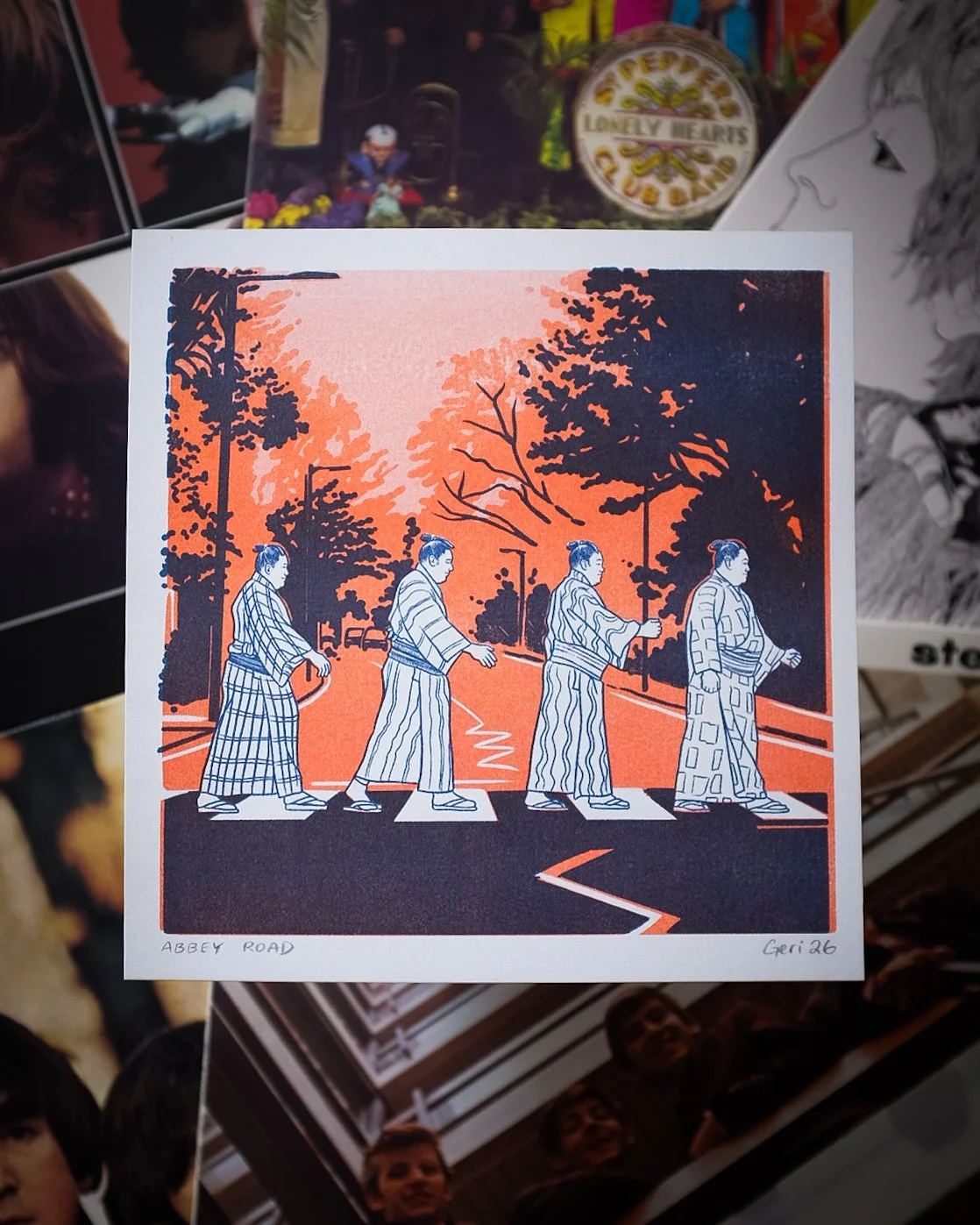
A 2-colour risograph print inspired by a viral photograph I took of Tamawashi, Kirishima, Oshoma, and Roga at Abbey Road during the 2025 London Grand Sumo exhibition at the Royal Albert Hall.
Printed in Tokyo by Hand Saw Press on Takeo Araveal paper, this piece combines soft risograph texture with a restrained colour palette inspired by traditional printmaking.
What is a riso print?
These prints use risograph technology, a method of printing developed in Japan in the mid-1980s. It can be described as a mix between screenprinting and photocopying. The risograph process produces prints with extremely vibrant, crisp inks, and sometimes these inks overlap during the printing process to create interesting and unique details. These soy-based inks also have a lower environmental impact.
Product details
Printed in Tokyo, Japan by the Hand Saw Press print studio. Each print is 210 × 210 mm square and printed on heavyweight Takeo Araveal paper.
Prints are packaged in cello bags with rigid cardboard inserts and shipped in flat mailers.
Please note that frames are not included.
Delivery times & prices
We ship worldwide. 日本へ国際郵便で送ります。
UK deliveries: 3-4 working days via Royal Mail 1st class
International deliveries available via Royal Mail International Standard Airmail
Prices calculated during checkout For more information on shipping times for international deliveries, please check the delivery & returns page.

Originally commissioned by popular news site Unseen Japan, this A4 riso print features an illustration of a classic Japanese street.
“The Japan you don’t learn about in anime.”
Unseen Japan focuses on covering news, politics, culture, and social justice movements in Japan. Our goal is to go beyond the stereotypes in the English speaking world about Japan and present the real diversity and complexity of the country. We aim, as much as possible, to communicate this message in the words of the people of Japan themselves – through translations of news and articles, and through direct interviews. Visit UnseenJapan.com to read more and become a supporter on Patreon.
What is a riso print?
These prints use risograph technology, a method of printing developed in Japan in the mid-1980s. It can be described as a mix between screenprinting and photocopying. The risograph process produces prints with extremely vibrant, crisp inks, and sometimes these inks overlap during the printing process to create interesting and unique details. These soy-based inks also have a lower environmental impact.
Product details
Printed in Nottingham, UK by Dizzy Ink print studio. Each print is A4 size (210 x 297 mm / 8.27 x 11.69 in) and printed on 170gsm Munken paper. Acid-free and FSC Approved.
Each print is signed with a traditional Japanese ‘hanko’ artist stamp. Prints are packaged in cello bags with rigid cardboard inserts and shipped in flat mailers.
Please note that frames are not included.
Delivery times & prices
We ship worldwide. 日本へ国際郵便で送ります。
UK deliveries: 3-4 working days via Royal Mail 1st class
International deliveries available via Royal Mail International Standard Airmail
Prices calculated during checkout For more information on shipping times for international deliveries, please check the delivery & returns page.

Sumo is considered to be the national sport of Japan and has a rich history of ancient traditions and rituals. Wrestlers, called 力士 (rikishi), compete in six divisions as administered by the Japan Sumo Association. When a rikishi reaches the second highest division, 十両 (juryō), he is considered to be a professional and earns a salary along with significant privileges. The top division, 幕内 (makuuchi), consists of 42 wrestlers who compete in regular tournaments to win the coveted Emperor's Cup.
Sumo is long thought by many foreigners to be mysterious and difficult to understand, but the basic rules are simple—a wrestler loses a match when any part of his body other than the soles of his feet touches the ground, or if he steps outside the 土俵 (dohyō).
My riso print depicts iconic elements of the sumo sport. They include: 手形 (tegata, rikishi handprint signature), 焼き鳥 (yakitori, chicken skewers), お土産 (omiyage, souvenir), のぼり旗 (noborihata, standing flag), 力士 (rikishi, sumo wrestler), タイ (tai, sea bream), 座布団 (zabuton, floor cushion), ちゃんこ鍋 (chankonabe, hot pot stew), 柝 (taku, wooden clappers), 廻し (mawashi, wrestler belt), 天皇賜杯 (tennoushihai, Emperor's Cup), 浴衣 (yukata, wrestler robe), 弓 (yumi, bow), 呼出 (yobidashi, ring announcer), 塩かご (shiokago, salt basket), 行司 (gyōji, referee), 綱 (tsuna, yokozuna ceremony belt), 応援タオル (ouen-taoru, cheering towel), 軍配 (gunbai, signalling fan), 化粧廻し (keshō-mawashi, ceremonial apron), 懸賞金 (kenshōkin, prize money). Also featured are nods to rikishi 白鵬 (Hakuho), 高安(Takayasu), 霧島 (Kirishima), and 照ノ富士 (Terunofuji).
Printed in dark navy federal blue and orange inks.
What is a riso print?
These prints use risograph technology, a method of printing developed in Japan in the mid-1980s. It can be described as a mix between screenprinting and photocopying. The risograph process produces prints with extremely vibrant, crisp inks, and sometimes these inks overlap during the printing process to create interesting and unique details. These soy-based inks also have a lower environmental impact.
Product details
Printed in Glasgow, UK by the world-famous Risotto print studio. Each print is A4 size (210 x 297 mm / 8.27 x 11.69 in) and printed on heavyweight 300gsm Munken Lynx paper. 100% recycled and FSC® Recycled certified.
Each print is signed with a traditional Japanese ‘hanko’ artist stamp. Prints are packaged in cello bags with rigid cardboard inserts and shipped in flat mailers.
Please note that frames are not included.
Delivery times & prices
We ship worldwide. 日本へ国際郵便で送ります。
UK deliveries: 3-4 working days via Royal Mail 1st class
International deliveries available via Royal Mail International Standard Airmail
Prices calculated during checkout For more information on shipping times for international deliveries, please check the delivery & returns page.
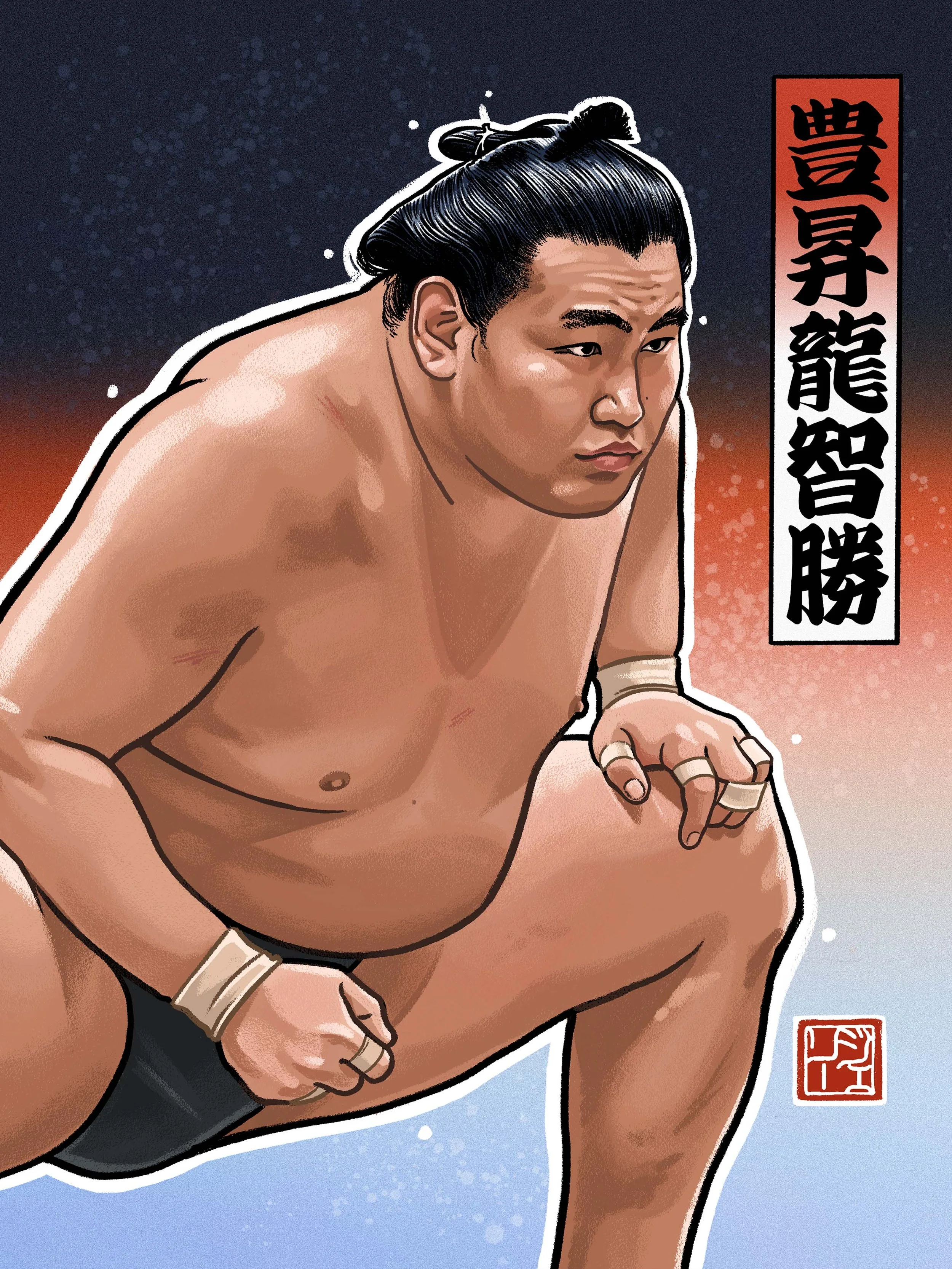
Sumo is considered to be the national sport of Japan and has a rich history of ancient traditions and rituals. Wrestlers, called 力士 (rikishi), compete in six divisions as administered by the Japan Sumo Association. When a rikishi reaches the second highest division, 十両 (juryō), he is considered to be a professional and earns a salary along with significant privileges. The top division, 幕内 (makuuchi), consists of 42 wrestlers who compete in regular tournaments to win the coveted Emperor's Cup.
—-
Hōshōryū Tomokatsu is the 74th Yokozuna of Grand Sumo. Born Sugarragchaagiin Byambasuren in Ulaanbaatar, Mongolia, he is the nephew to the 68th yokozuna, Asashōryū. Hōshōryū began his professional sumo career in January 2018 and quickly ascended through the ranks, clinching his first top-division title in July 2023 which led to his promotion to ōzeki. Demonstrating consistent excellence, Hōshōryū earned his second top-division championship in January 2025 and was subsequently promoted to yokozuna. Known for his dynamic and aggressive fighting style, he has been honoured with multiple special prizes, including two for Technique and one for Fighting Spirit.
Product details
Measures 9 × 12 inches (228mm × 304mm),printed on medium gloss “lustre” photo paper and posted in a board-backed cello bag.
Please note that frames are not included.
Delivery times & prices
We ship worldwide. 日本へ国際郵便で送ります。
UK deliveries: 3-4 working days via Royal Mail 1st class
International deliveries available via Royal Mail International Standard Airmail
Prices calculated during checkout For more information on shipping times for international deliveries, please check the delivery & returns page.
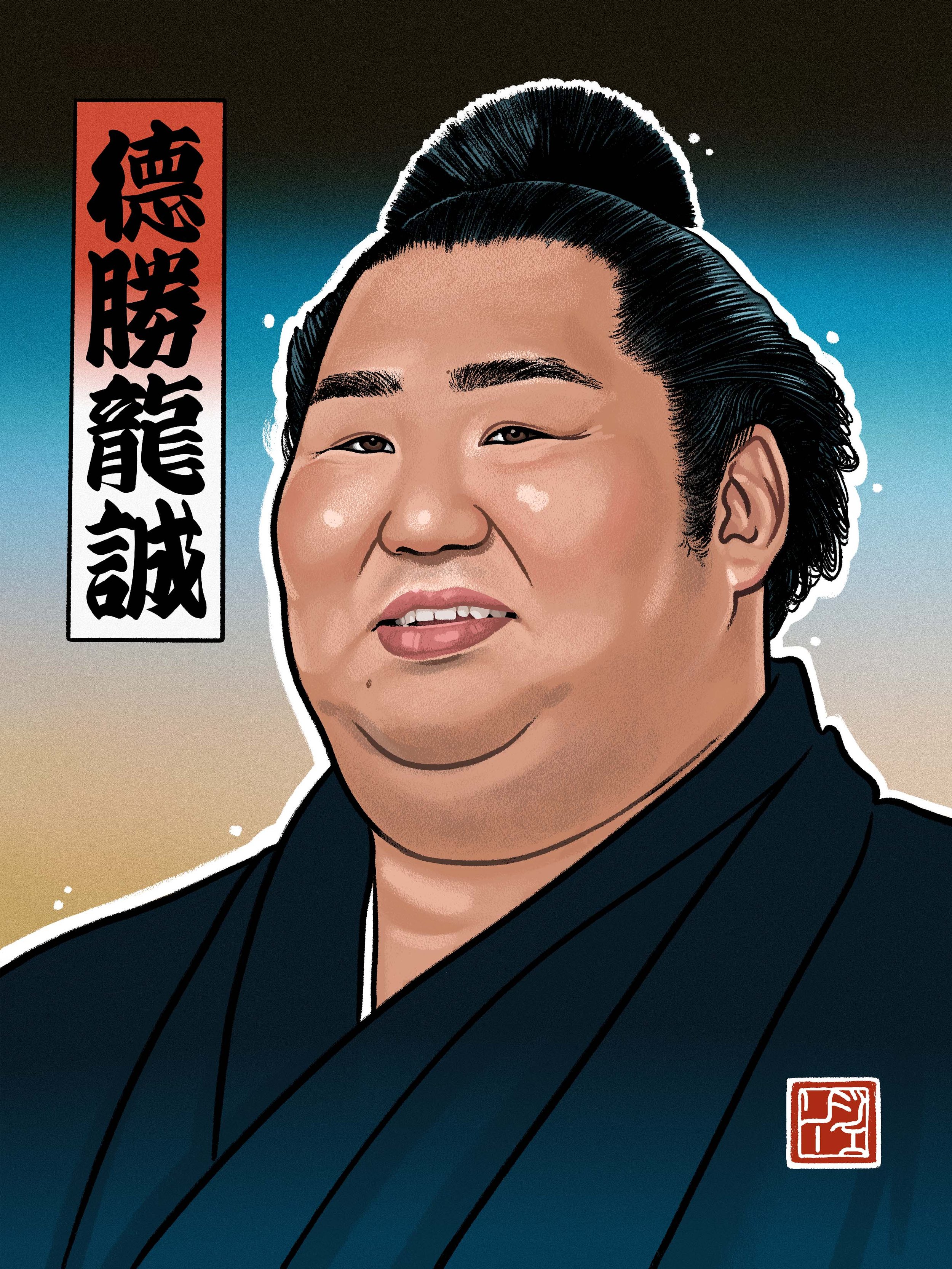
Sumo is considered to be the national sport of Japan and has a rich history of ancient traditions and rituals. Wrestlers, called 力士 (rikishi), compete in six divisions as administered by the Japan Sumo Association. When a rikishi reaches the second highest division, 十両 (juryō), he is considered to be a professional and earns a salary along with significant privileges. The top division, 幕内 (makuuchi), consists of 42 wrestlers who compete in regular tournaments to win the coveted Emperor's Cup.
—-
Tokushōryū Makoto was a professional sumo wrestler from Nara, Japan, born on August 22, 1986. He made his professional debut in 2009 and is affiliated with Kise stable. Tokushōryū was best known for his remarkable underdog victory in the January 2020 Grand Sumo Tournament, where he won the Emperor’s Cup as a rank-and-file maegashira 17—the lowest-ranked competitor in the top division at the time. His emotional victory, dedicated to his late mentor, made him a fan favorite. He retired in September 2023 and remains at Kisebeya as a coach under the name Sendagawa Oyakata.
Product details
Measures 9 × 12 inches (228mm × 304mm),printed on medium gloss “lustre” photo paper and posted in a board-backed cello bag.
Please note that frames are not included.
Delivery times & prices
We ship worldwide. 日本へ国際郵便で送ります。
UK deliveries: 3-4 working days via Royal Mail 1st class
International deliveries available via Royal Mail International Standard Airmail
Prices calculated during checkout For more information on shipping times for international deliveries, please check the delivery & returns page.

Sumo is considered to be the national sport of Japan and has a rich history of ancient traditions and rituals. Wrestlers, called 力士 (rikishi), compete in six divisions as administered by the Japan Sumo Association. When a rikishi reaches the second highest division, 十両 (juryō), he is considered to be a professional and earns a salary along with significant privileges. The top division, 幕内 (makuuchi), consists of 42 wrestlers who compete in regular tournaments to win the coveted Emperor's Cup.
—-
Ōshōma Degi is a professional Mongolian sumo wrestler affiliated with the Naruto stable, run by former Bulgarian Ozeki Kotooshu. He made his debut in 2021 and quickly advanced through the ranks, reaching the jūryō division in 2022. Despite facing numerous challenges and persistent injuries, he won the jūryō championship at the November 2022 basho in Kyushu. His efforts led to a promotion to the top makuuchi division in May 2024, making him the 29th Mongolian to achieve this rank.
Product details
Measures 9 × 12 inches (228mm × 304mm), printed on medium gloss “lustre” photo paper and posted in a board-backed cello bag.
Please note that frames are not included.
Delivery times & prices
We ship worldwide. 日本へ国際郵便で送ります。
UK deliveries: 3-4 working days via Royal Mail 1st class
International deliveries available via Royal Mail International Standard Airmail
Prices calculated during checkout For more information on shipping times for international deliveries, please check the delivery & returns page.
Featured Products

The first pin from my riso print series, Defying Tradition: Japanese Women Who Changed the World, is author, poet, and court lady Sei Shōnagon.
Shōnagon was an Imperial court lady who served Empress Teishi during the middle Heian era. At age sixteen, she married a government official and gave birth to a son. Shōnagon’s relationship with fellow writer and court lady Murasaki Shikibu was strained. The courts of Empress Teishi and co-empress Empress Shōshi encouraged rivalry between the writers, pitting the women against each other, despite the possibility that the two had never met. Shōnagon was famously ridiculed in Murasaki’s diary where she complained, “Shōnagon was dreadfully conceited. She thought herself so clever and littered her writing with Chinese characters; but if you examined them closely, they left a great deal to be desired.”
Shōnagon’s work, The Pillow Book, was a collection of poems, anecdotes, and essays giving insight to her life as a court lady. As it was originally meant to be a private work for her enjoyment only, she was able to freely write about her thoughts and opinions that she was not allowed to state publicly. As a result, the book became extremely valuable as a historical document.
Both Shōnagon and Murasaki, as women, had an active role in Heian-era society. Japanese kana, the writing system they used in their writing, was considered “the people’s language” in comparison to the formal Chinese, and made them far more popular and influential for centuries to come.
Product details
This gold-coloured hard enamel pin brooch measures 38mm x 40mm. It features fine screenprinted details and has two rubber clutches on the reverse side for extra safety and stability. Each comes displayed on a special gold foil-stamped backing card.
Delivery times & prices
We ship worldwide. 日本へ国際郵便で送ります。
UK deliveries: 3-4 working days via Royal Mail 1st class
International deliveries available via Royal Mail International Standard Airmail
Prices calculated during checkout
For more information on shipping times for international deliveries, please check the delivery & returns page.
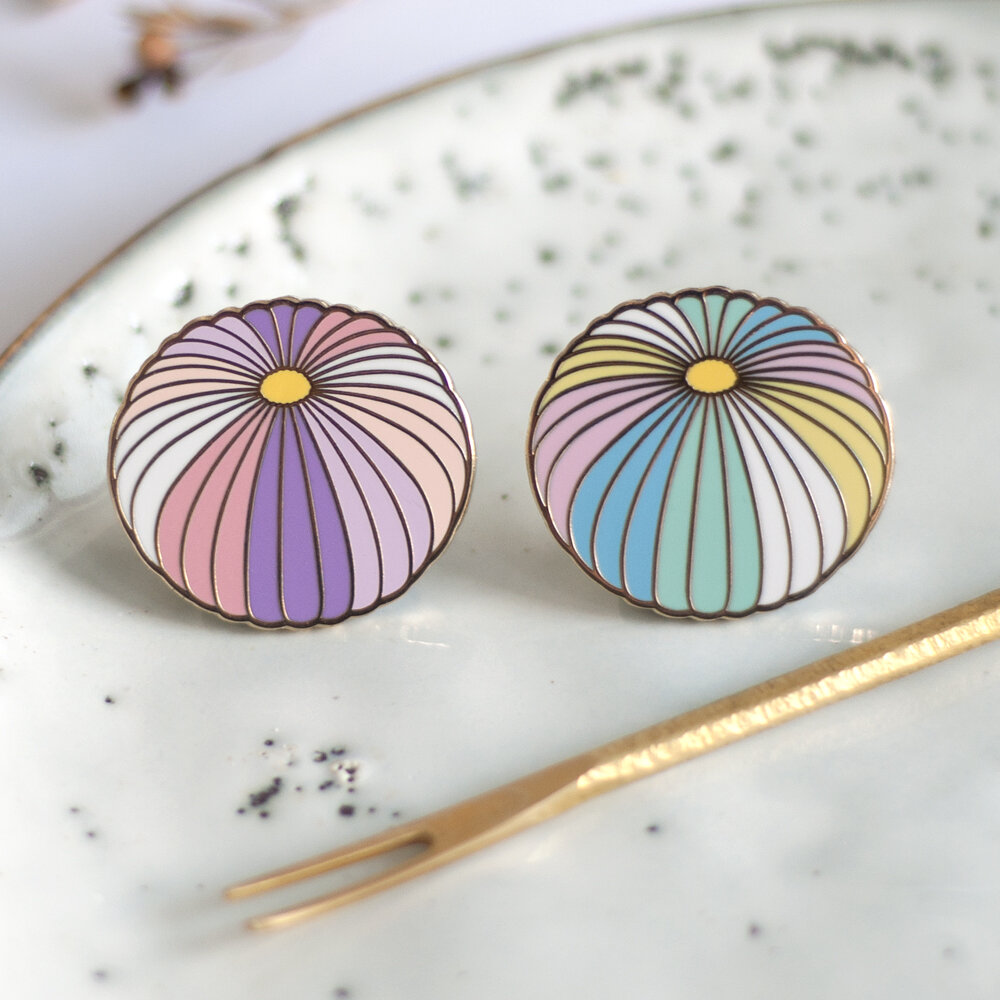
Japan is well-known for its huge variety of tasty and innovative sweets. While most people might already be familiar with everyday treats like mochi and dango, nerikiri wagashi (練り切り和菓子) are high-class sweets that could easily pass as works of art. Usually made from sweetened and boiled red and white bean pastes, these little morsels are sculpted by artisans into stunning shapes that look too good to eat. They are traditionally served with green tea during tea ceremony.
This pin brooch features a popular wagashi design called temari (手毬), a design intended to look like a traditional Japanese toy of the same name. (You can read more about the temari ball by checking out my illustration.) This pin would make the perfect gift for a traditional culture lover, sweets lover, or for anyone who appreciates a simple, elegant brooch design.
Product details
This hard enamel pin features gold edging with a smooth high gloss finish and measures 30mm tall x 32mm wide. It is presented on a special black backing card with matching gold foil stamping. There are two colours available: greens and blues, and pinks and purples.
Delivery times & prices
We ship worldwide. 日本へ国際郵便で送ります。
UK deliveries: 3-4 working days via Royal Mail 1st class
International deliveries available via Royal Mail International Standard Airmail
Prices calculated during checkout
For more information on shipping times for international deliveries, please check the delivery & returns page.

Let’s face it—we could all do with a little more good luck these days. The maneki-neko (招き猫) means “beckoning cat” in Japanese and is a good-luck figure thought to bring good luck or fortune to the owner, and is often found in the entranceways of shops. The kanji characters 千万両 are read as “sen man ryo,” meaning “ten million gold pieces.”
This pin would make the perfect gift for any cat lover in your life. It is manufactured in high gloss gold hard enamel and can be used as a brooch, bag decoration, lapel pin, or simply displayed as a collectible.
Product details
This hard enamel pin features gold edging with a smooth high gloss finish and measures 37mm tall x 33mm wide. It is presented on a special black backing card with matching gold foil stamping.
Delivery times & prices
We ship worldwide. 日本へ国際郵便で送ります。
UK deliveries: 3-4 working days via Royal Mail 1st class
International deliveries available via Royal Mail International Standard Airmail
Prices calculated during checkout
For more information on shipping times for international deliveries, please check the delivery & returns page.
Latest Blog Posts

Long time no post! I said long ago that I didn’t really want to get into YouTube, but I decided to push myself outside of my comfort zone and try making some videos in Japanese as a way of practicing more regularly. In my first one, I talk about what spurred my interest in Japan way back in 1995. It’s subtitled in English, so I hope you’ll watch (and maybe subscribe?)

先週の金曜日はノッティンガムからロンドンへ行き「ブライアンとロビンのクリスマス・コンペンディウム・オブ・リーズン」を初めて見った。イギリスに住んでいる人なら、この有名なデュオを知ってるはずだが、知らない人のために紹介しておくと「ブライアン」とはブライアン・コックス教授、マンチェスター大学の素粒子物理学者だ。それだけではなく…

Instead of sharing the usual offerings from big brands, this year I’ve decided to share a selection of unique gift ideas from fellow independent artists, illustrators, and designers from around the world who are working hard to make a living doing what they love (and some of my products, too).

September was a huge month for me that I’ll never forget. I was fortunate enough to travel to Japan for the second time this year—not for language school, but to participate in an artist residency at the beautiful Almost Perfect gallery in Kuramae, Tokyo. Situated in a renovated 100-year-old rice shop…

Last year I wrote a fairly… optimistic, shall we say, blog post about how I planned to study for the summer JLPT N3 exam in London. Having the N5 and N4 certificates already under my belt, by early 2018 I was ramping up my study schedule ahead of a five-week stint in Japan…

日本人の友達とフォロワーのみなさん!2月27日から3月30日まで東京に行きます。その時に販売しているアートプリント、エナメルピン、ステッカー、ワッペンなどを持っていくつもりです。もし手渡しでもよしければ会ってお渡しします。
Follow Geri Draws Japan on Instagram
Inspired by the rich visual traditions of sumo, this original mokuhanga (Japanese woodblock print) pairs the gunbai (軍配) fan used by gyōji referees to declare the winner of a bout with blooming peonies, a motif often associated with nobility, resilience and good fortune.
The artwork was conceived, carved and hand-printed during my residency at the Mokuhanga School in Karuizawa, Japan. Following traditional Japanese woodblock printing methods. This piece was printed from five carved blocks, with a total of six impressions each.
Because no two hand-printed woodblock prints are ever completely identical, slight variations in colour, texture and registration should be embraced as part of the medium.
Signed and numbered limited edition of 10.
What is a mokuhanga print?
Mokuhanga is a traditional Japanese woodblock printing technique using hand-carved wooden blocks, water-based pigments, brushes, and washi paper.
These prints were created using the sosaku-hanga (“creative print”) philosophy, where the artist is responsible for every stage of the process — from the original sketch, to carving the blocks, to hand-printing each individual piece.
Product details
Designed, carved and printed by me during my residency at the Mokuhanga School in Karuizawa, Japan. Each print is approximately 140 × 280 mm square and printed on off-white washi paper. Please note that due to the nature of the hand-made prints, each print is unique, and will differ slightly in both texture and detail.
Prints are packaged in cello bags with rigid cardboard inserts and shipped in flat mailers.
Please note that frames and mounts/mats are not included.
Delivery times & prices
We ship worldwide. 日本へ国際郵便で送ります。
UK deliveries: 3-4 working days via Royal Mail 1st class
International deliveries available via Royal Mail International Standard Airmail
Prices calculated during checkout For more information on shipping times for international deliveries, please check the delivery & returns page.